Planning Your 2027 Editorial Calendar: Seasonal Content Angles That Capture Early Planners
How independent hoteliers across Australia and New Zealand can structure quarterly content angles 90 days ahead of booking windows to win direct reservations.
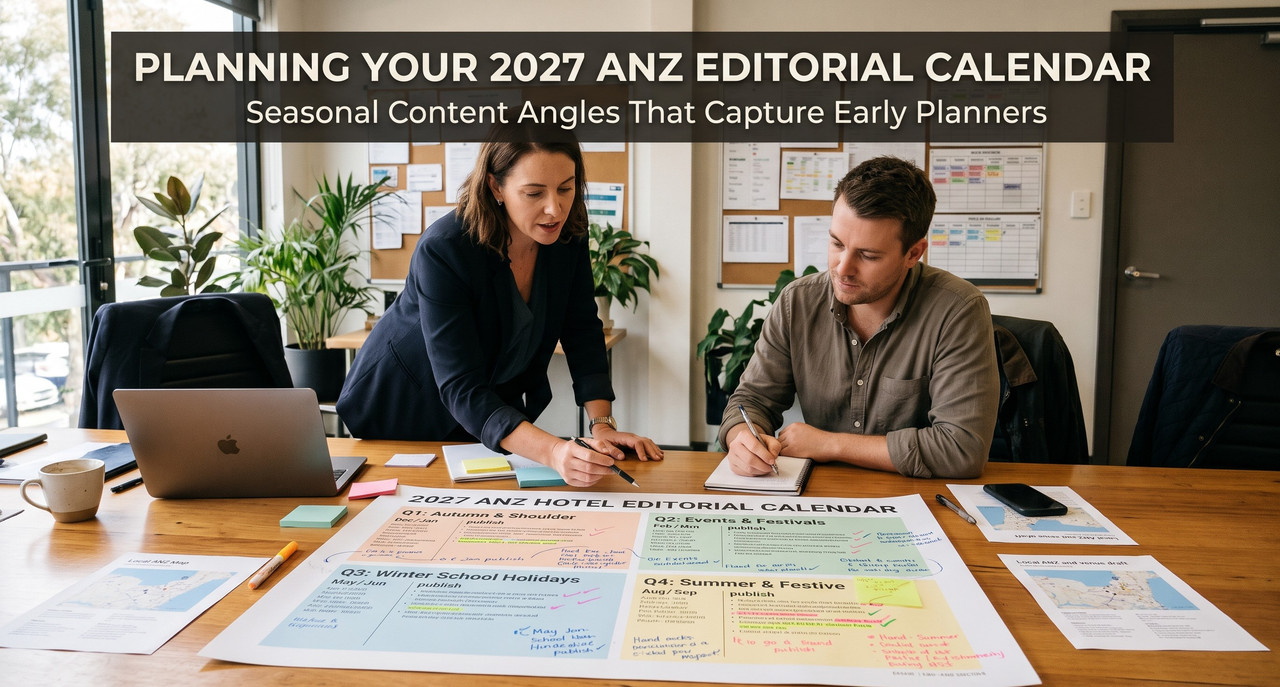
During the final weeks of the year, travellers across Australia and New Zealand often sit down with family over the summer holidays to map out their 2027 breaks, milestone trips, and regional weekend escapes. Yet many independent hotels wait until peak season arrives before publishing destination guides or seasonal packages, leaving early planners to book through Online Travel Agencies (OTAs). Search engines and conversational AI travel assistants take weeks and sometimes months to crawl, index, and recommend new web pages. When you publish seasonal content well ahead of Southern Hemisphere booking windows, your website establishes topical authority early and appears right when travellers begin researching. By structuring a simple 2027 editorial calendar now, independent hoteliers across NZ and Australia can publish evergreen local stories and seasonal angles that attract high-intent direct bookers all year round. ### 4 Seasonal Content Angles to Anchor Your 2027 ANZ Calendar Rather than scrambling for last-minute social media updates each week, organise your hotel blog around four predictable Southern Hemisphere publishing windows. **🔧 Implementation Blueprint:**
Q1 Publish (December–January) — Autumn & Shoulder-Season Escapes
While guests unwind over the summer holidays, publish guides focused on quiet autumn vineyard tours, scenic coastal drives, and cosy mid-week breaks. Highlight flexible direct booking perks that appeal to couples and retirees travelling outside school holidays. For real-world inspiration, see how [Kerikeri Park Lodge unlocked over 240% direct revenue growth during the Northland shoulder season](/blog/how-kerikeri-park-lodge-unlocked-over-240-percent-direct-revenue-growth).
Q2 Publish (February–March) — The 2027 Local Events & Festival Calendar
Compile a curated list of major concerts, sporting fixtures, food festivals, and regional conferences happening near your property throughout 2027. Include realistic walking or driving times from your front door so event-goers book directly with you for convenience. Pairing event coverage with [co-created local partner micro-guides](/blog/the-local-partner-content-strategy-co-creating-micro-guides-with-nearby-businesses) strengthens both neighbourhood relevance and referral traffic.
Q3 Publish (May–June) — Stress-Free School Holiday & Family Itineraries
Parents plan winter and spring school holiday accommodation months in advance. Create practical 3-day family itineraries featuring rainy-day indoor activities, kid-friendly local cafes, and your property’s interconnecting rooms or family suites. Structuring your guides cleanly helps AI assistants match multi-guest needs, as covered in our guide on [how conversational search handles multi-guest itineraries](/blog/how-conversational-search-handles-multi-guest-itineraries).
Q4 Publish (August–September) — Early-Bird Summer & Festive Stays
Launch your end-of-year celebration guides, group dining options, and extended summer stay offers before October. Early festive content captures organised family groups and corporate travellers locking in peak dates ahead of price surges. Use our framework for [building a 48 hours in your city itinerary page](/blog/how-to-build-a-48-hours-in-your-city-itinerary-page-that-captures-intent) to turn high-intent holiday browsers into direct reservations.
Conclusion
A disciplined 2027 editorial calendar removes the guesswork from hospitality content marketing and gives your property a measurable lead over OTAs during every ANZ booking cycle. By publishing seasonal stories 90 days ahead of demand—and pairing every guide with clear internal links to your rooms and booking engine—you turn early-stage trip planning into high-margin direct revenue across all four quarters. To ensure these new seasonal pages are also readable by next-year's AI trip planners, review our checklist on [preparing your hotel's digital footprint for 2027 AI travel agents](/blog/preparing-your-hotels-digital-footprint-for-2027-ai-travel-agents).
Frequently Asked Questions
How far in advance should an ANZ hotel publish seasonal blog posts?
Aim to publish seasonal destination content at least 90 to 120 days before the actual travel period. Publishing in December and January positions your property for autumn shoulder-season escapes, while August and September captures early summer and Christmas planners.
How many blog posts should an independent hotel publish each month?
Consistency matters far more than volume. Publishing two well-researched, locally focused articles per month—paired with clear internal links to your room pages and booking engine—is enough to build strong organic visibility.
Can hotels reuse and update seasonal content each year?
Yes. Rather than creating a brand-new URL every year, update your existing annual event guides and seasonal itineraries with fresh 2027 dates, updated local opening hours, and new guest photos to preserve accumulated search rankings.