Perplexity for Hoteliers: How Conversational AI Answers Traveller Search Prompts
How Perplexity extracts live web facts, direct booking URLs, and review sentiment to answer travel queries, and how hotels can optimize for direct citations.
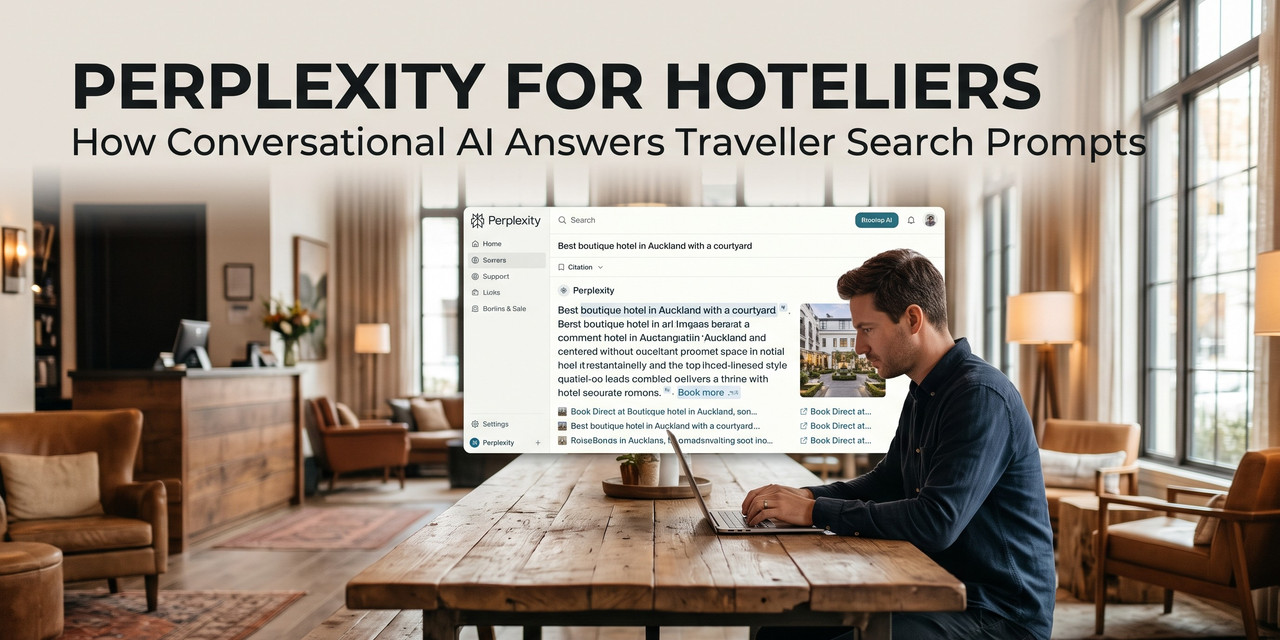
Travellers are changing how they discover accommodation. Instead of typing short keywords into standard search boxes, guests now ask conversational questions directly into AI engines like Perplexity. A user might prompt: "Find a quiet boutique hotel in Sydney with secure parking, superfast Wi-Fi, and a rooftop terrace for a weekend break." Perplexity does not simply produce a list of ten blue links. It actively scours the live web, extracts specific operational facts, checks real guest reviews, and synthesises a comprehensive answer complete with numbered citations. If your property details are vague or buried in complex scripts, Perplexity will cite third-party travel agencies instead of your official website. Understanding how Perplexity answers travel prompts allows independent hoteliers to claim these direct citations and capture high-intent reservations. Here is a practical four-step operational outline to optimise your property for conversational AI search.
Step 1: Understand How Perplexity Indexes Live Hotel Data
Unlike legacy generative models that rely solely on outdated training data, Perplexity searches the live web for every prompt. When a traveller asks for hotel suggestions, Perplexity deploys web crawlers to retrieve pages containing matching attributes. It evaluates the credibility of each source, compares information across multiple websites, and generates a synthesised summary. To ensure your website is selected as the primary source citation, your pages must be easily crawlable, lightning-fast, and free of blocking scripts. Explore our foundational recommendations on how to prepare your hotel website for conversational AI search.
Step 2: Provide Unambiguous Operational Facts on Key Pages
Conversational AI models crave factual clarity. When copy is full of vague marketing adjectives without specifics, the engine turns to structured third-party directories. Audit your website to ensure concrete operational facts are explicitly stated in plain text. State your exact check-in times, vehicle height restrictions for parking, room dimensions, pet policies, and breakfast serving hours. Group these details logically beneath clear headings on your room and amenities pages. The clearer your operational facts, the easier it is for Perplexity to quote your direct website as the authoritative answer for specific traveller prompts.
Step 3: Harmonise Review Sentiment and Third-Party Citations
Perplexity frequently cross-references customer reviews from Google Business Profile, TripAdvisor, and local directories when forming recommendations. If a traveller asks for "the quietest rooms with comfortable beds", Perplexity examines guest review sentiment across platforms to validate the claim. Encourage satisfied guests to mention specific property features in their reviews. Consistent positive mentions of your quiet courtyard rooms or high-speed internet across multiple review sites reinforce your property's entity trust score. Learn more about the relationship between guest opinions and algorithms in our guide on [how guest feedback secretly dictates your AI search rankings](https://www.marketinnhq.com/blog/how-guest-feedback-secretly-dictates-your-ai-search-rankings).
Step 4: Connect Structured Schema Markup to Direct Booking Engines
To convert an AI citation into a direct booking, Perplexity must recognise your booking link as the primary source. Implement rich schema markup including Hotel, LodgingBusiness, and FAQPage schemas. Clearly define your room types and include direct reservation URLs inside your structured data. Pair this with clear internal navigation trails so search bots understand the full hierarchy of your site. If you have not yet implemented structural trail code, read our guide on [what website breadcrumbs are and how Breadcrumb Schema clarifies site structure](https://www.marketinnhq.com/blog/what-are-website-breadcrumbs-a-plain-english-guide-for-hoteliers).
Conclusion
**Be the Direct Source in the Conversational Search Era** Conversational search is not coming in the distant future; travellers are using Perplexity today to plan holidays and business trips. By providing structured operational facts, maintaining positive review consistency, and implementing clean schema markup, independent hotels can win high-visibility citations and turn conversational queries into profitable direct bookings.
Frequently Asked Questions
How does Perplexity differ from traditional search engines for hotel bookings?
Perplexity synthesises direct, conversational answers from multiple live web sources with clickable citations, rather than returning a traditional page of sponsored ads and ten blue links.
Why does Perplexity cite online travel agencies instead of my hotel website?
Perplexity cites OTAs when an official hotel website lacks structured schema, provides vague room details, or hides key operational facts behind difficult-to-crawl scripts.
Can hotels pay for advertising or sponsored citations on Perplexity?
Perplexity focuses on organic, factual answers based on live web retrieval. Direct visibility is earned through strong entity SEO, clear website content, and positive external citations rather than standard pay-per-click bidding.
What is the fastest way to get my hotel cited on Perplexity search prompts?
Publish clear, factual content on your website answering common guest queries, implement Hotel and FAQ Schema markup, and ensure consistent business details across Google Business Profile and major review sites.