Paid Media & PPC on a Modest Budget
How independent hotels can protect brand search terms, run hyper-targeted Meta retargeting, and outsmart OTAs with modest ad spend.
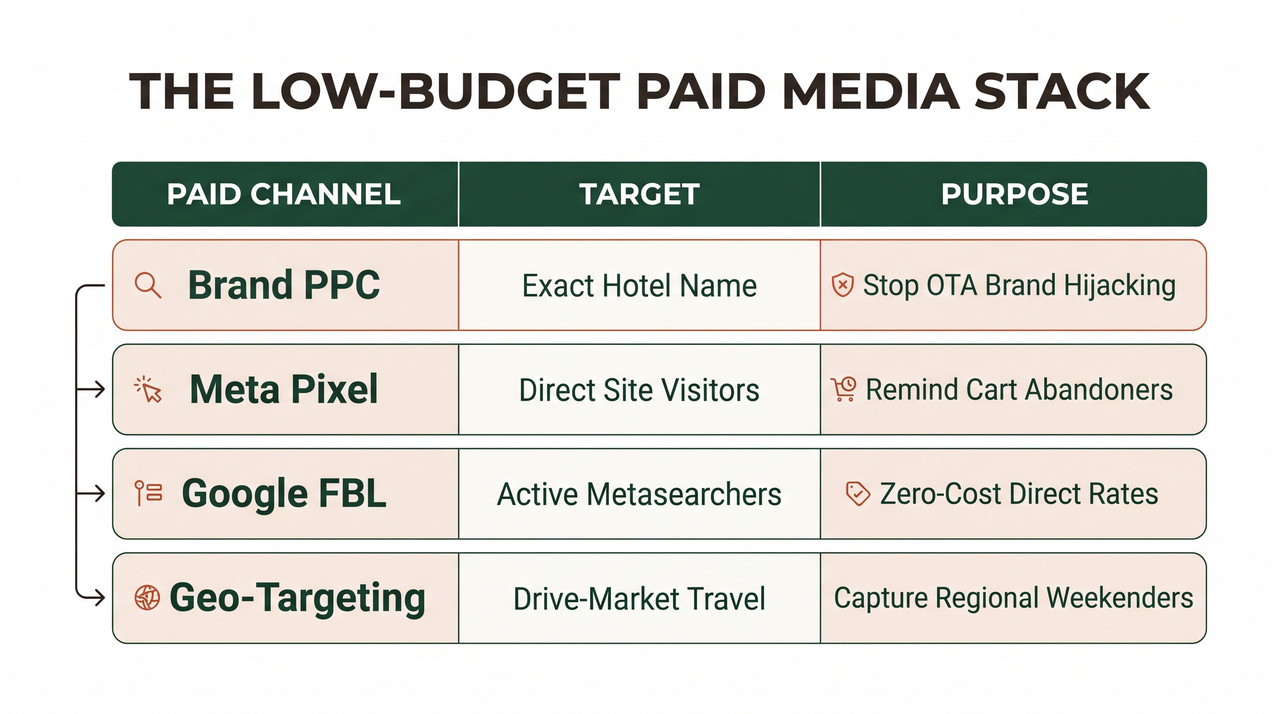
When independent hoteliers hear the terms "PPC" or "Paid Meta Ads", they often picture massive marketing budgets and complex agency contracts. Many try running a few broad search ads, only to see their budget consumed by high-bidding Online Travel Agencies (OTAs) without generating a single direct reservation. However, paid media does not require thousands of dollars a month. When executed with precision, even a modest daily budget of $5 to $10 can yield impressive returns. By focusing strictly on high-intent brand protection and low-cost retargeting, independent properties can outsmart OTAs and secure profitable direct bookings without over-spending. ### 4 Smart Steps to Run Paid Media on a Modest Budget Instead of competing against global OTAs on broad city search terms like "hotels in Auckland", structure your paid ad strategy around four cost-effective pillars. **🔧 Implementation Blueprint:**
Defend Your Hotel Brand Name with Google Brand PPC
Set up an exact-match Google Search campaign targeting your hotel’s official name. OTAs routinely bid on your brand name to divert guests to their booking portals. Running a low-cost brand campaign ensures your official site occupies the top spot.
Run Hyper-Targeted Meta Retargeting Ads
Install the Meta Pixel on your website and booking engine. Use a small daily spend to display simple, high-quality photo ads on Facebook and Instagram to travellers who visited your website in the last 14 days but left without booking.
Maximise Google Free Booking Links (FBL)
Connect your booking engine engine feed to Google Hotel Center. Ensure your direct rates appear in the organic metasearch listing alongside paid OTA ads, allowing price-conscious searchers to book directly at zero ad cost.
Geofence Your Regional Drive-Market
When running promotional campaigns, limit your geographic ad radius to locations within a 2-to-4 hour driving distance. Regional drive-market travellers have higher immediate booking intent and lower decision friction during shoulder seasons.
Conclusion
### What’s Coming Next in the Masterclass? This paid media guide represents Week 4 of our 6-Week Hotel Marketing Masterclass. Next week, we cover earning organic guest trust: * **Week 1:** [Hotel Digital Marketing Health Check](/blog/why-independent-hotels-need-a-marketing-strategy) * **Week 2:** [Search Engine Marketing & Local Intent](/blog/local-intent-search-how-independent-hotels-outrank-otas-in-neighbourhood-discovery) * **Week 3:** [Email Marketing & PMS Database Automation](/blog/email-marketing-unlocking-the-secret-revenue-hidden-in-your-pms) * **Week 4:** Paid Media & PPC on a Modest Budget * **Week 5:** Social Proof, Reviews & Guest Word-of-Mouse * **Week 6:** Booking Engine Conversion Rate Optimisation
Frequently Asked Questions
Why should a hotel pay for Google Ads if they already rank organically?
OTAs frequently bid on independent hotel names to place their ads above your organic search result. Running a brand ad ensures your direct website occupies the top visual position on mobile screens.
How much budget does an independent hotel need to start running ads?
An independent property can start with as little as $5 to $10 per day split between Google Brand PPC and Meta website retargeting.
What is the return on ad spend (ROAS) a hotel should expect?
Brand search campaigns and retargeting ads typically generate a return on ad spend (ROAS) between 8:1 and 15:1 because you are targeting high-intent travellers who already know your property.