Paid, Earned, and Owned Media: A Hotelier's Guide to Digital Revenue
How independent hotels can master the Paid, Earned, and Owned (PEO) framework to cut OTA commissions and build sustainable direct booking revenue.
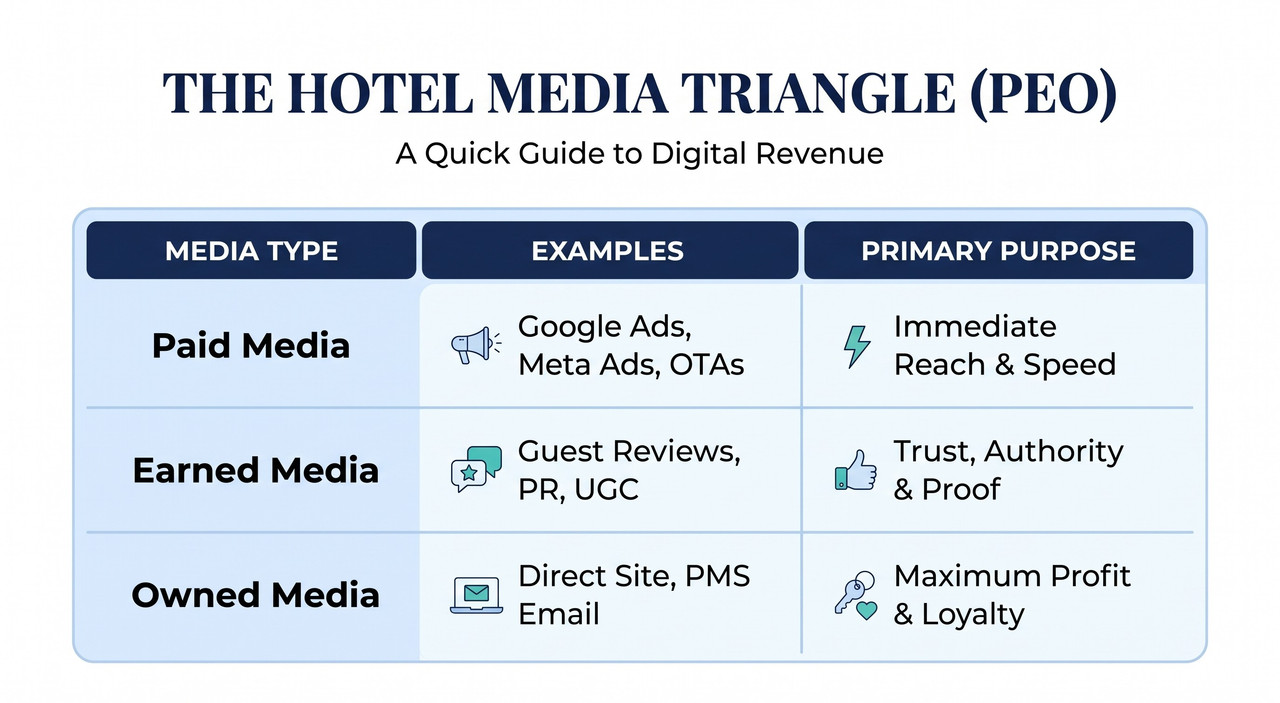
Between managing OTA listings, posting on social media, running Google Ads, and sending guest newsletters, it is easy to lose sight of which channels actually generate profitable direct bookings. Modern hotel marketing becomes remarkably simple when you divide your guest acquisition efforts into three distinct, manageable buckets: Paid Media, Earned Media, and Owned Media. Understanding how these three pillars interact allows independent property managers to stop over-spending on third-party commissions and start building sustainable, high-margin revenue streams. ### Decoding the 3 Media Pillars for Independent Hotels To lower your guest acquisition costs, you must understand the operational purpose, costs, and strategic advantages of each media type. **🔧 The 3 Media Pillars Breakdown:**
Paid Media (Rent-to-Play Visibility)
This includes any channel where you pay money to buy prospective guest attention. Google Ads, Facebook sponsored posts, OTA commission placements, and metasearch ads belong here. While Paid Media delivers instant visibility during low-occupancy periods, the moment you stop paying, the traffic disappears entirely. Pair paid campaigns with [self referencing canonical tags](/blog/how-canonical-tags-protect-your-hotels-google-ranking) and clean tracking parameters to avoid squandering budget.
Earned Media (The "Word-of-Mouse" Trust Engine)
Earned media represents organic publicity that you cannot buy directly. It includes TripAdvisor reviews, Google local ratings, travel blog mentions, news coverage, and social media posts tagged by happy guests. Search engines and AI travel bots rely heavily on Earned Media sentiment to evaluate whether your property is worthy of recommendation, as detailed in our guide to [conversational travel search](/blog/how-conversational-search-handles-multi-guest-itineraries).
Owned Media (Your High-Margin Crown Jewels)
This encompasses every digital asset that your hotel owns 100% and controls completely. Your official website, direct booking engine, blog content, and Property Management System (PMS) guest email database are your primary Owned channels. Out of the three pillars, Owned Media delivers the highest profit margins because guest transactions carry zero commission fees. Strengthening your owned foundation begins with a regular [hotel marketing health check](/blog/why-independent-hotels-need-a-marketing-strategy).
Conclusion
### How to Balance Your Hotel Media Mix The ultimate goal for an independent property manager is using Paid and Earned Media as feeders to drive guests into your Owned channels. When a guest discovers you through a Google Ad (Paid) or reads a glowing guest review (Earned), your website copy and booking engine (Owned) must seamlessly convert them into a direct booker. Once they check out, capturing their verified email address ensures their next stay becomes a 100% Owned revenue event. Coupling your owned channels with targeted [local intent search optimization](/blog/local-intent-search-how-independent-hotels-outrank-otas-in-neighbourhood-discovery) ensures a sustainable flow of high-margin bookings year-round.
Frequently Asked Questions
Which media type should an independent hotel focus on first?
Start with your Owned Media. If your hotel website, mobile booking engine, and local schema are broken, any money spent on Paid Ads or publicity will be wasted due to poor conversion rates.
Are OTAs considered Paid Media or Owned Media?
OTAs are a form of Paid Media (pay-per-booking commission). You do not own the guest profile data or the listing platform; you are essentially renting visibility to fill immediate room inventory.
How does Earned Media influence AI search engines?
Generative AI tools like ChatGPT, Perplexity, and Apple Intelligence continuously scan user review patterns and travel blog mentions across the web. High positive review sentiment acts as a major ranking signal for conversational travel recommendations.