How Open Knowledge Graphs Feed AI Travel Search Engines
How generative AI tools cross-reference open knowledge bases like Wikidata to verify property facts and cite independent hotel websites.
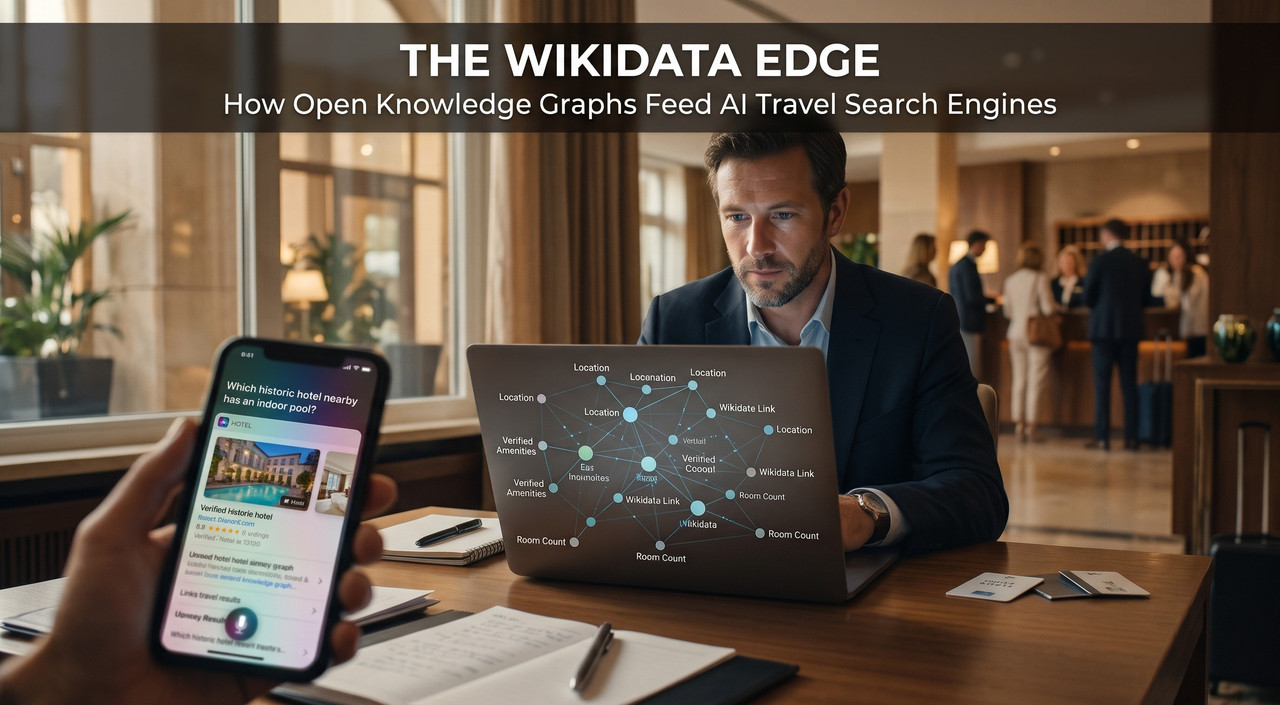
When a traveller asks ChatGPT, Perplexity, or Apple Intelligence for boutique accommodation recommendations, the AI does not just scan keyword rankings. Instead, it queries vast neural knowledge networks backed by open knowledge graphs. At the core of these retrieval systems sits Wikidata, the free, multilingual knowledge base that powers Wikipedia and serves as the primary training ground for modern artificial intelligence. While major hotel chains have dedicated teams linking their properties across global databases, independent hoteliers often assume Wikidata is only for historic monuments or celebrities. In reality, open knowledge graphs are the foundation of modern search engine validation. When an AI agent decides whether your property matches a guest prompt, it cross references your website claims with open entity repositories. If your hotel does not exist as a recognised entity in these open knowledge graphs, generative engines hesitate to recommend your direct website, defaulting instead to Online Travel Agencies.
Step 1: Audit Your Hotel's Presence Across Open Entity Bases
Begin by searching Wikidata.org and Wikipedia for your property name, former brand identities, and local heritage status. Many boutique hotels already exist in open databases under historical registry entries, architectural catalogues, or local tourism records. However, these entries often contain broken website links, outdated room numbers, or obsolete contact details. Identifying your existing entity identifier (such as a Wikidata QID) allows you to clean up foundational property facts. This entity audit forms an essential starting point for your wider [hotel marketing strategy](/blog/why-independent-hotels-need-a-marketing-strategy).
Step 2: Establish Your Canonical Wikidata Item and Statement Triples
Every entry in an open knowledge graph consists of structured claims called statement triples: subject, predicate, and object. For an independent hotel, you need verified statements linking your entity to factual real world attributes. Key statements include instance of (hotel, boutique hotel, or resort), coordinate location (exact latitude and longitude), official website URL, postal code, and heritage designation if applicable. Grounding your property data in factual statements gives AI models the verified context needed to cite your hotel, as explained in our guide to [Perplexity travel prompts](/blog/perplexity-for-hoteliers-how-conversational-ai-answers-traveller-search-prompts).
Step 3: Link Your Direct Website Using SameAs Schema Markup
Creating a knowledge graph entry is only half the battle; your official website must explicitly claim ownership of that entity. You accomplish this by adding the `sameAs` property to your website Schema.org LodgingBusiness markup. In your JSON-LD code, link your homepage directly to your Wikidata URL, your Google Knowledge Graph ID, and your official social profiles. Establishing this explicit relationship tells search engine crawlers that your direct website and the open knowledge graph item represent the exact same physical business. Pair this with [self referencing canonical tags](/blog/how-canonical-tags-protect-your-hotels-google-ranking) to maintain unified authority across the web.
Step 4: Monitor Entity Reconciliation in Perplexity and ChatGPT
Once your open entity data and schema are connected, test how conversational search tools interpret your property. Query tools like ChatGPT Search and Perplexity with specific prompts regarding your location, year established, and architectural character. Check whether the AI accurately attributes answers to your direct domain rather than third party booking portals. Monitoring how conversational tools reconcile your entity data mirrors the best practices outlined in our [Google Business Profile checklist for AI visibility](/blog/the-hoteliers-google-business-profile-checklist-for-ai-visibility) and [Apple Intelligence hotel discovery guide](/blog/how-apple-intelligence-local-entity-data-are-changing-hotel-discovery).
Conclusion
Generative AI search represents a profound shift from page rankings to verified entity knowledge. By taking ownership of your open knowledge graph data on Wikidata and binding it to your direct website through structured schema, you provide AI travel planners with the statistical confidence they need to recommend your hotel. When AI engines can independently verify your existence across open databases, direct travellers find your front door first.
Frequently Asked Questions
Why do AI search engines rely on Wikidata instead of just crawling hotel websites?
AI models prioritize verified factual consistency. Because websites can make unsubstantiated marketing claims, models cross reference open databases like Wikidata to confirm that a property physically exists with verifiable location and ownership data.
Can any independent hotel create an entry on Wikidata?
Wikidata has clear notability and source requirements. Independent hotels that have received independent press coverage, historical designation, or architectural awards can readily be documented with verifiable citations.
How does the sameAs schema property help hotel SEO?
The sameAs property acts as a digital bridge between your website and external knowledge bases. It tells search engine algorithms and AI assistants that your website belongs to a specific, verified entity in the global knowledge graph.
Does having a Wikidata entity help reduce OTA reliance?
Yes. When an AI search engine has high confidence in your direct hotel entity, it cites your direct website URL in its conversational answer instead of relying exclusively on OTA aggregator profiles.