How Guest Feedback Secretly Dictates Your AI Search Rankings
How modern AI search agents parse the unstructured sentiment and exact phrasing in guest reviews to recommend independent hotels in conversational travel planning.
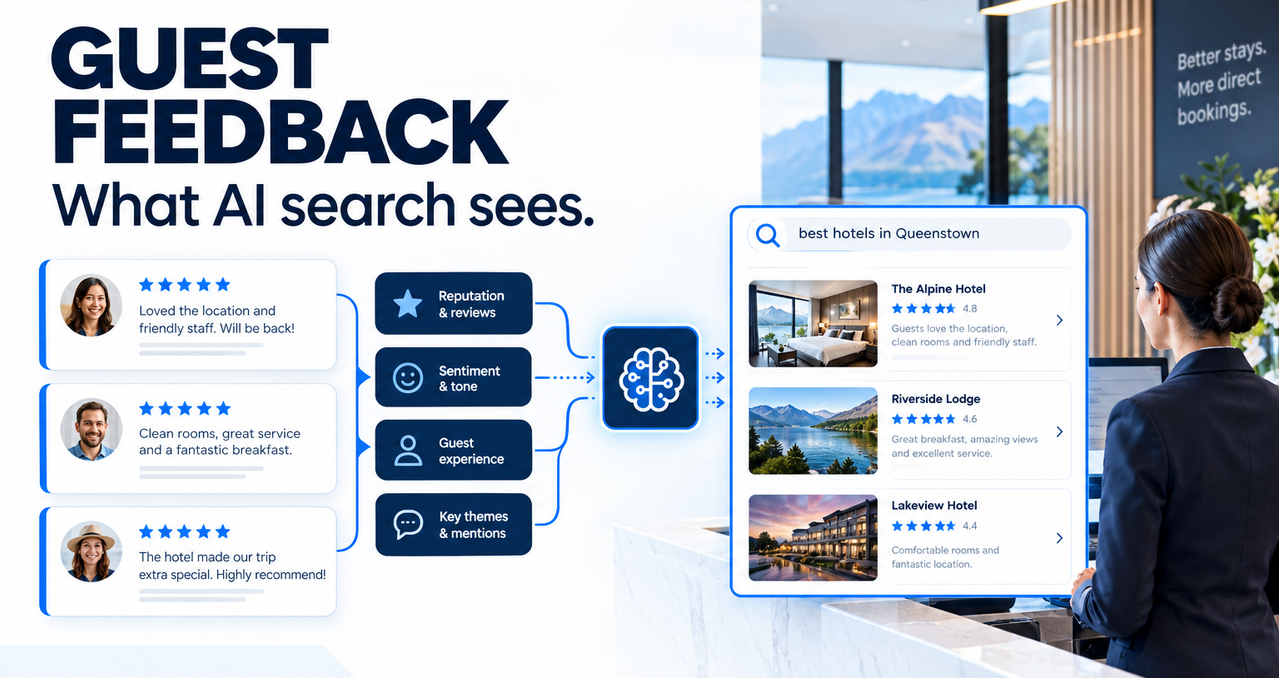
For decades, hotel reputation management revolved around a single number: your average star rating. Hoteliers chased a 4.5 or 4.8 score on major review platforms, believing that higher numbers automatically translated to top placement on search engines. Today, the rapid rise of agentic AI travel assistants has quietly broken that traditional scoring system. Modern artificial intelligence algorithms do not merely tally up positive star ratings. Autonomous travel agents powered by large language models scan thousands of unstructured guest comments, social mentions, and staff responses. They evaluate exact language, context, and sentiment to verify whether your hotel actually delivers on its promises. If a traveller asks an AI assistant for a quiet boutique hotel with fast internet and artisan coffee, the engine looks straight into your recent review text for organic proof.
1. How Agentic AI Travel Models Mine Review Phrasing for Semantic Truth
When autonomous travel bots evaluate your property, they look for semantic entities rather than keyword repetition. An agentic AI travel engine assesses natural phrases such as "the courtyard garden was silent at midnight" or "the desk chair made working remotely effortless." These specific descriptions create strong factual anchors in the model's knowledge graph. If your website claims that your rooms are peaceful, but multiple reviews mention street noise or thin walls, AI models immediately downgrade your reliability score. Search engines prioritize verified guest experiences over marketing copy. Structuring your operations to deliver consistent real-world moments directly feeds the algorithms that power [semantic discovery for hotel content](https://www.marketinnhq.com/blog/semantic-discovery-hotel-content).
2. Prompting Guests to Mention Specific Amenities and Unique Experiences
Many hotels send generic post-stay emails asking guests to leave a quick rating. As a result, reviews often say little more than "great stay" or "nice room." While positive, these vague comments provide zero semantic value to AI models trying to answer detailed travel queries. Transform your post-stay messaging by guiding guests toward descriptive feedback. Ask gentle, focused questions about their favourite breakfast dish, the comfort of the mattress, or how they enjoyed the complimentary bike hire. When guests naturally name these specific features in their public reviews, they provide rich training data that helps conversational travel assistants match your property with niche traveler requests, as discussed in our guide to [repurposing guest feedback into content](https://www.marketinnhq.com/blog/repurposing-guest-feedback-into-content).
3. Crafting Management Responses Packed with Contextual Verification Signals
Your responses to guest reviews are not just polite customer service gestures; they are indexable text that AI search algorithms read with high priority. Copying and pasting the same canned response to every review wastes a prime opportunity to reinforce your property's key strengths. Write thoughtful, specific replies that confirm operational details. If a guest praises your locally sourced breakfast honey, thank them and mention the nearby family apiary that supplies it. If a guest notes a minor issue that you resolved, explain the exact operational step you took to fix it. These detailed interactions demonstrate active management integrity and teach AI scrapers that your property is proactive, transparent, and dependable.
4. Connecting Sentiment Insights Directly to Front Desk and Housekeeping Routines
AI algorithms notice patterns long before human managers spot them on spreadsheets. Recurring mentions of slow check-in queues, flickering bedside lamps, or cold shower water can silently drag down your AI visibility scores across entire travel categories. Break down internal data silos by sharing review sentiment directly with your front of house and housekeeping teams during morning briefings. When staff understand how daily operational excellence influences online discovery, they take greater ownership of guest interactions. Fixing small friction points before they become recurring public complaints protects your reputation and keeps your property visible in [autonomous AI travel agents](https://www.marketinnhq.com/blog/beyond-rag-optimising-hotel-knowledge-graphs-for-ai-travel-agents).
Conclusion
**The New Era of AI-Driven Reputation** In the age of agentic AI travel, your guest reviews are no longer static testimonials. They are dynamic signals that directly determine whether conversational search engines recommend your property or send travellers to your competitors. By delivering memorable guest experiences, encouraging descriptive feedback, and responding with genuine context, you build an unshakeable digital reputation that powers direct bookings for years to come.
Frequently Asked Questions
How do agentic AI travel engines read hotel guest reviews?
AI travel agents use natural language processing to extract sentiment, recurring themes, and specific entity descriptions (such as room acoustics or breakfast quality) from review text rather than relying solely on overall star ratings.
Why are short, generic reviews less effective for hotel AI SEO?
Brief reviews like 'nice stay' lack descriptive context. AI search models search for detailed mentions of specific amenities, room comfort, and local experiences to answer conversational travel queries accurately.
Does responding to hotel reviews improve AI search visibility?
Yes. Detailed, authentic management responses provide additional context and verify that the hotel is actively managed, which reinforces positive semantic signals in AI knowledge graphs.
How can independent hotels encourage guests to leave more detailed reviews?
Ask targeted, open questions in post-checkout messaging—such as asking about their favourite breakfast item or how they slept—which prompts guests to naturally describe specific hotel features.